Choose the job before choosing the color
If black feels repetitive, start with the item that bothers you most. Is it a dark jacket that dominates every outfit, black shoes with light summer clothes, or a row of identical work tops? Those are different problems. Replacing every black item with beige would give you another uniform before you know whether you like it.
Pull out three outfits you wear regularly and place the black item beside them. Write down what you want instead: less contrast, more warmth, a lighter overall look, or simply variety. That sentence gives your experiment a purpose.
Five alternatives, with outfits to try
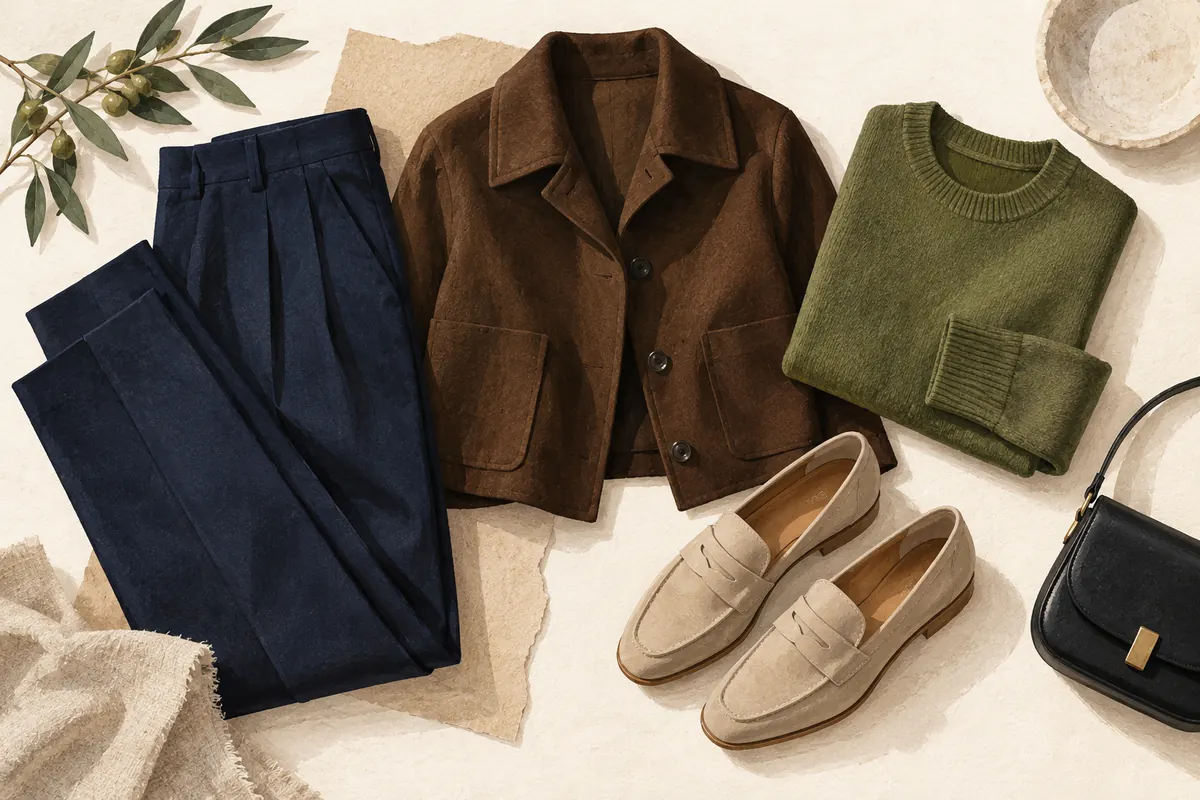
- Navy: Try navy trousers with a pale blue shirt and burgundy shoes. For a relaxed outfit, pair a navy cardigan with cream denim and your existing trainers.
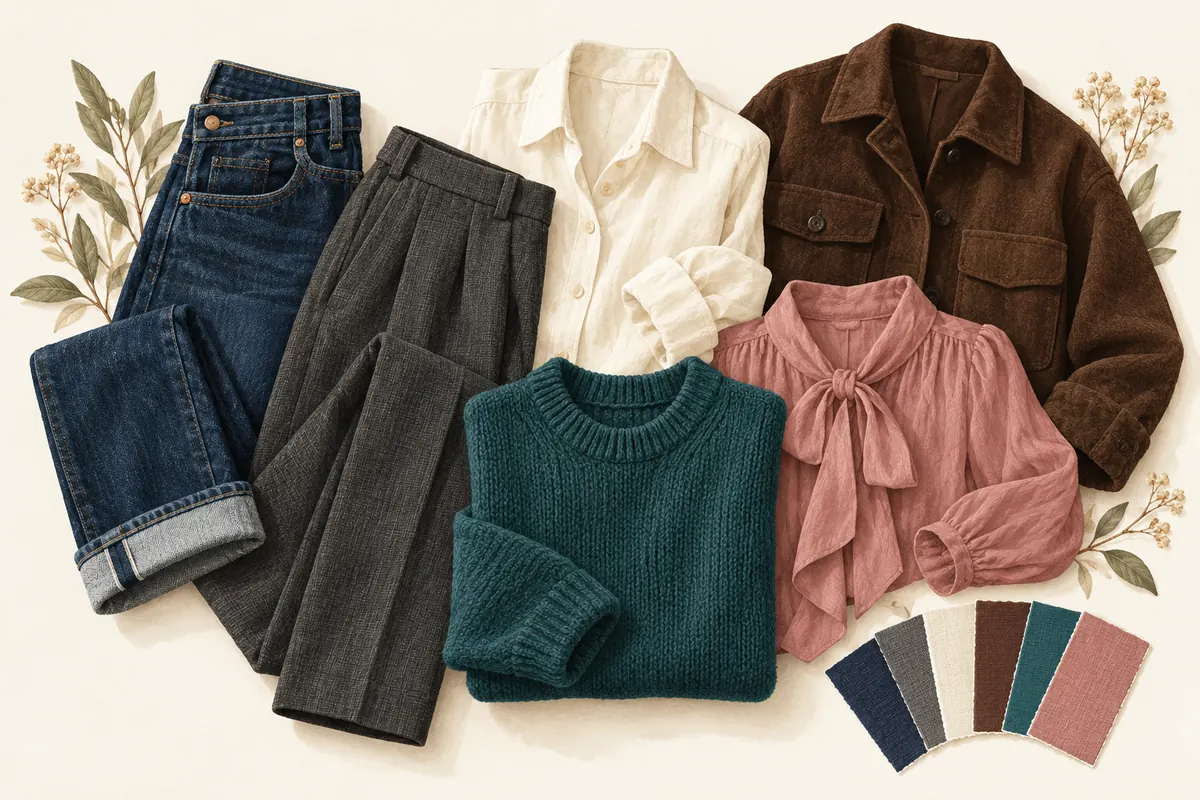
- Chocolate brown: Try a brown jacket over a rose top with blue jeans. Another direction is brown trousers, an ivory knit and a blue bag.
- Charcoal: Use it when you want a dark base with a different feel from black. Try charcoal trousers with lavender or a charcoal skirt with a soft green sweater.
- Olive: Start with an olive overshirt over a white T-shirt and denim. If you like a warmer combination, try olive trousers with a peach top.
- Stone or light taupe: Try a light jacket over a deep blue dress, or stone trousers with a berry knit. Check the actual fabric: these names can describe very different shades.
These are outfit prompts, not seasonal assignments. Pick the combination that appeals to you and adapt it to your own clothes.
How to keep black in the mix
A black bag or pair of boots does not force the whole outfit to be black. Try your black trousers with a brown knit, or a navy jacket over an existing black dress. Look at the full combination before rejecting it because the neutrals differ.
If the outfit feels disconnected, repeat one color in a small detail: the black in a striped top can connect to black shoes, for example. Alternatively, let the shoes be the only black element and see whether you like that contrast. Repetition is an option, not a requirement.
Run a three-outfit check before buying
- Choose one candidate piece, such as a navy cardigan.
- Make one everyday outfit, one slightly smarter outfit and one outfit for your usual weekend activity using clothes you own.
- Include shoes, bag and outerwear. A top that works only without your actual coat may be less useful than it first appears.
- Wear or photograph the combinations. Note which one you would choose tomorrow.
If the piece needs several other purchases before you want to wear it, pause. You may need a different shade, cut or garment rather than more clothes.
Build around a favorite, not a ban
Your most useful neutral is one you enjoy wearing repeatedly. You might keep black for evening clothes, brown for everyday shoes and navy for work. There is no requirement to appoint a single permanent winner.
Once you find a promising alternative, use our wardrobe palette exercise to connect it with your favorite colors. If the issue is specifically a neutral recommended by a color analyst, try troubleshooting your season’s neutrals.
Common questions
Do all my neutrals have to match?
No. Try the complete outfit and decide whether you enjoy the combination. Navy, brown and black can appear together without every accessory matching exactly.
Should I donate my black clothes?
Only if you no longer want them. Experiment with a few combinations first; a new top or lighter jacket may make an existing black piece useful again.
Published by the developer of Stylist AI. Our editorial approach · Suggest a correction
← Back to the journal