Write a brief that includes shape
Finding a vivid T-shirt does not solve the problem when you wanted a structured dress or tailored trousers. Start with a sentence such as “a washable cobalt midi skirt with pockets” or “a lilac cardigan that works over my work shirts.” Include your size, budget and any fabric requirements before searching.
Separate essentials from preferences. Pockets may be essential, while an exact shade of blue may be flexible. This helps you recognize a useful alternative without buying something just because it is colorful.
Use a small set of shade and garment searches
Retailers use different names for similar colors. Search one broad family, one common shade and one nearby alternative. For a purple cardigan, try purple, lilac and violet separately; for a strong blue skirt, try blue, cobalt and royal blue.
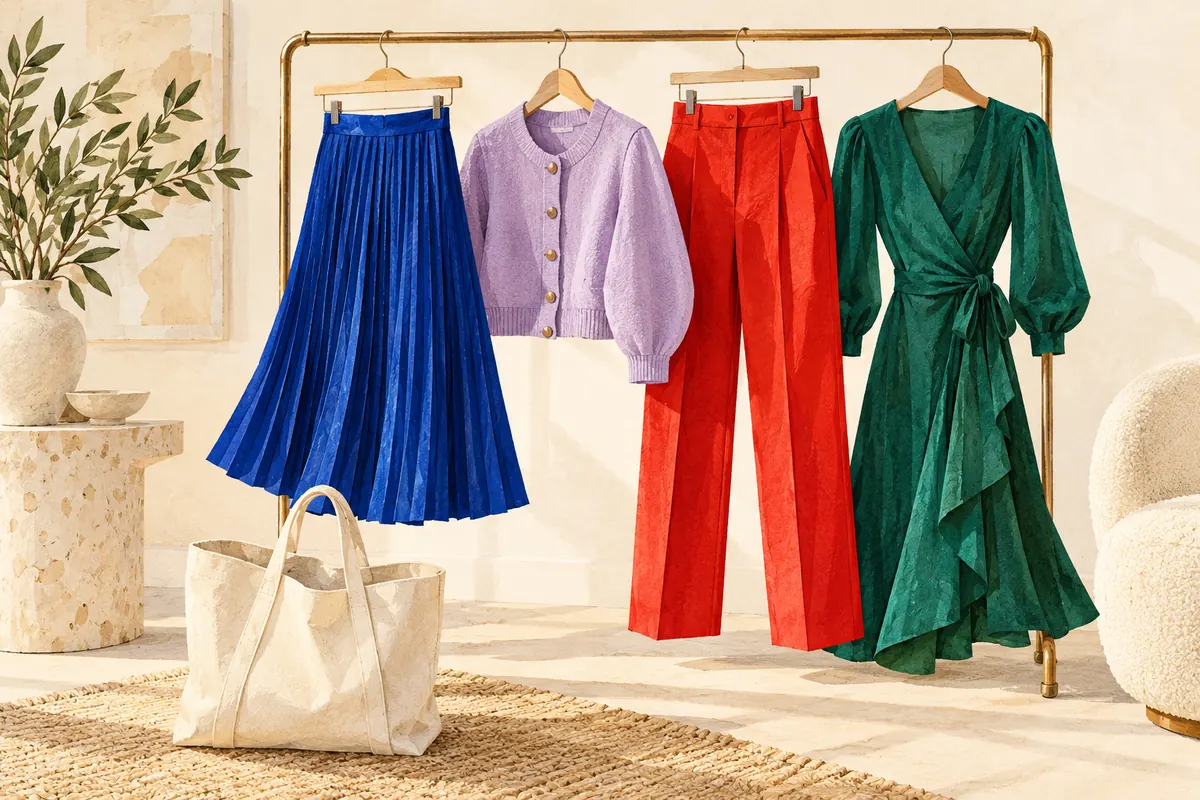
- “cobalt midi skirt pockets cotton”
- “lilac cardigan cropped wool”
- “red wide leg trousers high waist”
- “green wrap dress sleeves”
Adapt those examples to your own requirements. Overly specific wording can hide useful results, so remove one optional detail if the search is empty. On a shop’s website, check both the color filter and individual product color options: the main product photograph may show only one version.
Change the search route when the current range disappoints
Try a garment specialist, an independent maker, a multi-brand shop and a secondhand marketplace with the same brief. These are different routes to compare, not a promise that any particular seller has your size or shade in stock.
On resale listings, exact measurements, fabric labels and clear photographs matter more than an appealing color name. Ask about a detail only if it affects your decision. For an unfamiliar shop, check delivery costs and return terms before deciding that a piece is within budget.
Save the search if nothing fits. Waiting can be more useful than buying a bright version of a shape you already know you dislike.
Check the shade beyond the main photograph
Adobe’s explanation of white balance shows how lighting and camera settings affect photographed color. A product image is therefore a reference, not a guarantee of how the fabric will look beside your clothes.
Compare multiple product images when available. If you receive the item, examine it in your normal dressing space and with the garments you planned to wear. Keep labels attached until you have checked the fit and applicable return conditions. A digital palette or camera comparison can inform the decision, but cannot remove every lighting difference.
Make the colorful piece earn a place
Put together one complete outfit before buying, including shoes and outerwear. Then name another occasion on which you would wear the item. You do not need every garment to be endlessly versatile, but you should know whether you are buying an everyday piece or a deliberate special-occasion choice.
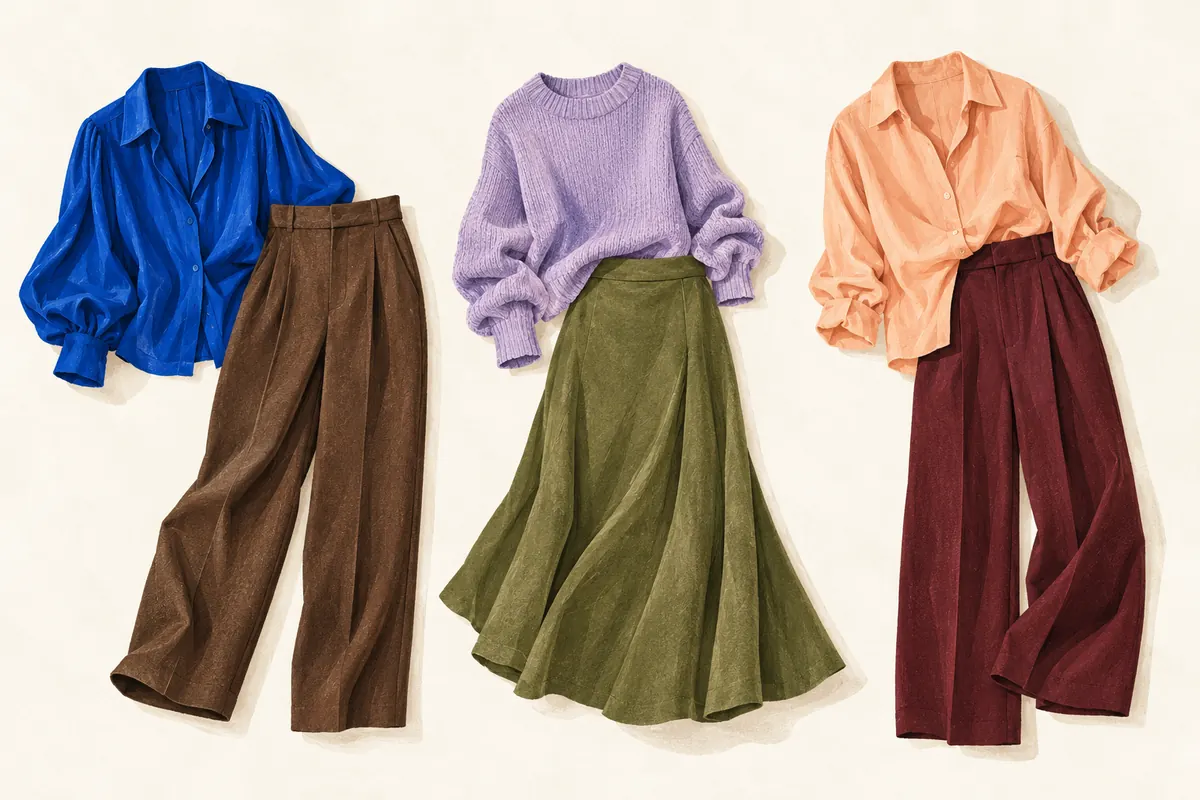
If the color feels difficult to combine, try one of our six outfit pairings. If everything you find is a print, our print guide can help you judge the overall combination rather than one isolated shade.
Common questions
Should I buy a color I love in a cut I dislike?
Usually it is better to keep searching. Try it on if you are curious, but color alone does not resolve a fit or comfort problem.
How can I search for pastels without finding only basics?
Combine the shade with a specific garment and construction detail, such as a pale blue pleated skirt or lilac puff-sleeve blouse. Then loosen optional details if results are too narrow.
Sources & further reading
Sources checked October 26, 2026. Outfit examples and decision exercises are our styling suggestions, not measured rules about attractiveness. Sources have not endorsed this article or our app.
Published by the developer of Stylist AI. Our editorial approach · Suggest a correction
← Back to the journal