Use the color wheel for ideas
The Adobe color-wheel guide describes neighboring colors as analogous and opposing colors as complementary. Those relationships can suggest a starting pair, but a wheel does not choose your fabrics, proportions or personal taste.
For getting dressed, ask a more concrete question: which color could I add to this outfit? Keep your familiar jeans, skirt or trousers and test a different top, scarf or bag. You will learn more from a wearable combination than from a perfect diagram you never use.
Six pairings to explore
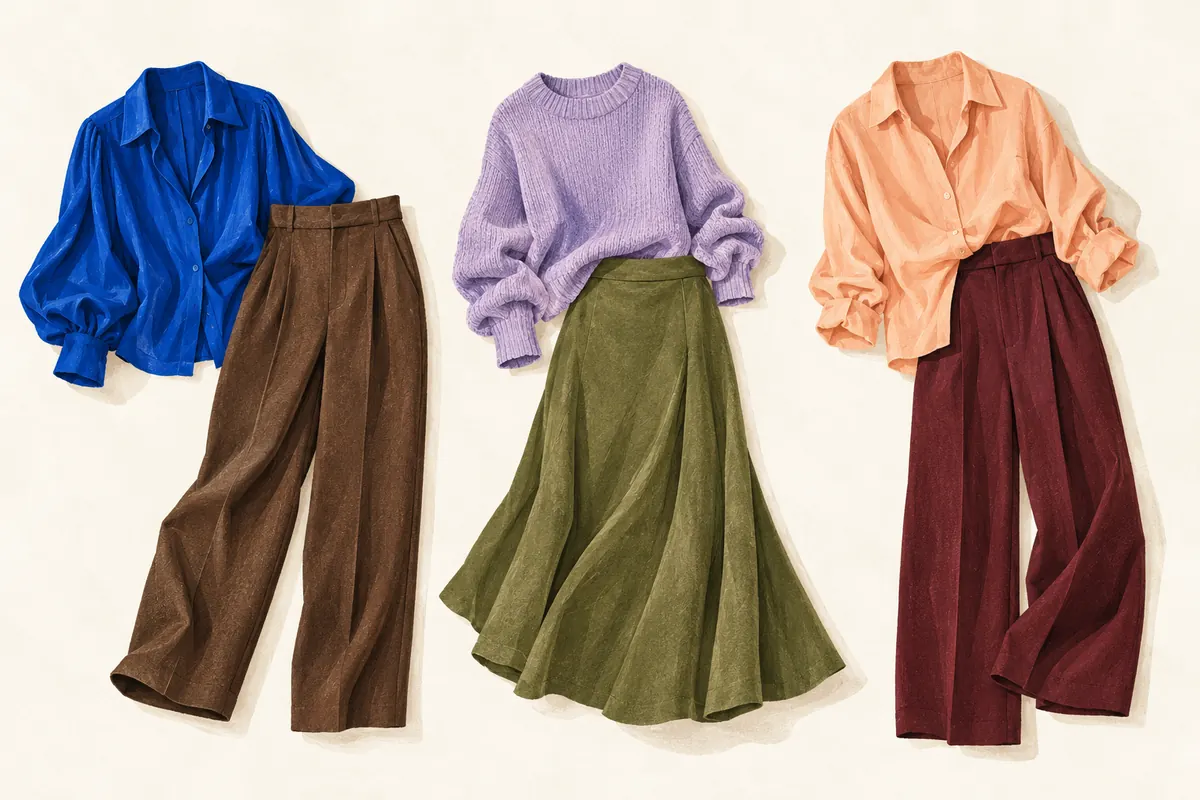
- Cobalt and chocolate: Try a cobalt shirt with brown trousers. For a smaller step, wear a blue bag with a brown jacket and denim.
- Lavender and olive: Put a lavender knit over an olive skirt, or add a lilac scarf to an olive overshirt. Compare a pale lavender with a deeper purple before choosing.
- Peach and burgundy: Try a peach blouse with burgundy trousers. If you prefer a dark outfit, use peach only in a scarf or small printed detail.
- Tomato red and pale blue: Start with a pale blue shirt and a red bag. A red cardigan over the same shirt makes the contrast a larger part of the outfit.
- Teal and rust: Try a teal dress with a rust cardigan, or a teal top above dark trousers with rust-colored shoes.
- Pink and forest green: Wear a pink shirt with a dark green skirt. To soften the overall effect, test a dusty pink instead of a vivid one.
Color names are broad. A pair you dislike in one shop may appeal in a different depth, finish or fabric. Use these as directions to investigate, not exact matches to buy.
Change the amount before changing the colors
Suppose you like red and pale blue together on a hanger but feel uncomfortable in a red coat over a blue dress. Try reversing the emphasis: a mostly blue outfit with a red shoe or bag. You are testing the same relationship with a different visual balance.
There is no mandatory percentage. A useful exercise is to make three versions: a tiny accent, one full garment, then two large blocks of color. Keep the version that feels comfortable for the place you will wear it.
Make the experiment easy to judge
Keep the garment shapes familiar while you explore color. If you simultaneously introduce a new silhouette, a bold print and unfamiliar shoes, it becomes harder to identify what you dislike.
- Choose a base outfit you already wear.
- Add one color partner from the list.
- Look at it with your usual shoes and bag.
- Write a practical observation: “I like the lavender scarf, but not a whole lavender coat.”
If it still does not feel right, leave it. A color experiment can be successful even when the answer is that you prefer your original outfit.
Turn a good pairing into repeat outfits
Save a photo of the combination you like and write down the garments. Next time, repeat the colors with another familiar shape. Chocolate trousers and a cobalt shirt might become brown jeans and a blue cardigan.
For a wider plan, build a wardrobe color palette. If you enjoy the colors but want more visual detail, explore patterns and prints.
Common questions
Must every outfit follow color-wheel rules?
No. A color wheel can generate ideas, but it does not establish which outfit you should like. Fabric, contrast, proportions and preference all enter the decision.
Can I mix warm and cool colors?
Yes. Try the actual garments together. You can enjoy a combination even when its colors are associated with different seasonal palettes.
Sources & further reading
Sources checked October 26, 2026. Outfit examples and decision exercises are our styling suggestions, not measured rules about attractiveness. Sources have not endorsed this article or our app.
Published by the developer of Stylist AI. Our editorial approach · Suggest a correction
← Back to the journal