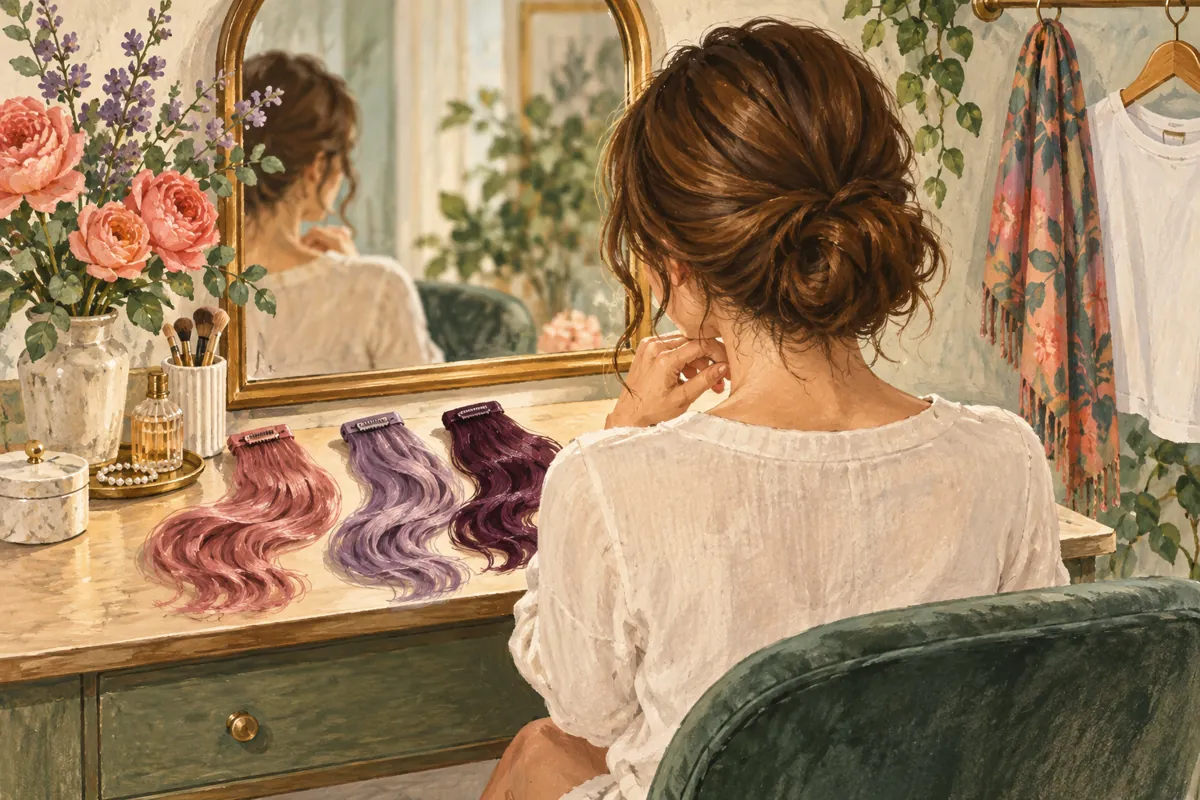
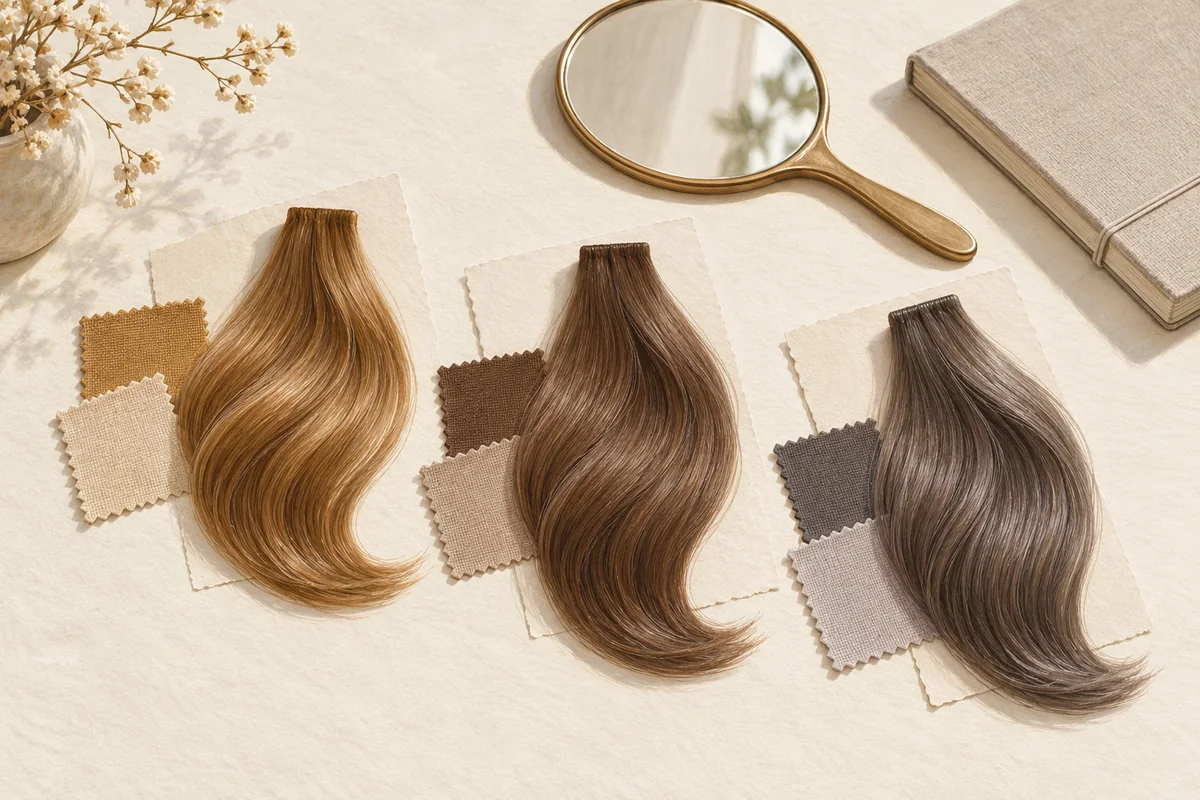
Ask two smaller questions
“Should I go cooler?” and “Should I go darker?” are different questions. A light golden reference and a dark ash-brown reference change both at once. If you prefer the second, you still do not know whether it was the depth, the tone or the whole hairstyle that appealed.
Choose one starting depth, such as the medium brown you already have. Then collect a warmer, a more neutral and a cooler-looking reference around that depth. Use references as descriptions of the look you want, not promises of an exact result on your own hair.
Compare without committing to dye
Look at your current hair in steady daylight alongside a few familiar tops. Notice whether your concern is the overall color, lighter ends, the root contrast or the way it looks with one outfit. Write the concern narrowly; “I want less contrast between the roots and ends” is a different brief from “I want a cooler brown everywhere.”
A colorist’s sample locks or a wig can help you picture a direction. A digital preview can be another sketch, but it cannot establish the eventual dye result. Keep your usual hairstyle and makeup in mind so the reference represents how you normally get dressed.
For photographs, compare similar lighting and avoid filters. Our photo guide explains how to reduce distracting differences. Old summer and winter photographs are useful memories, but a poor controlled comparison if everything else has changed too.
Platinum or golden blonde: define the contrast you want
“More contrast” can mean several things: a bigger difference from your roots, warmer color beside cooler clothes, or more visible variation between highlights. Ask which effect you want before choosing between platinum and golden blonde.
Make a four-reference sheet: a cool and warm blonde of similar lightness, then a cool and warm option one step deeper. You are collecting a brief, not predicting a dye result. If all your cool references are much lighter than the warm ones, you still have two decisions mixed together.
| Your priority | Question for the colorist |
|---|---|
| A less golden finish | Can we change tone while keeping a similar depth? |
| Softer root contrast | Would placement or a different depth better address this? |
| A bolder overall look | How would each option work with my usual haircut and maintenance? |
If two people prefer different references, ask what each person likes about them. One may be judging harmony and the other a deliberate contrast. You can choose either effect. Take the selected reference and an example to avoid to the salon; leave formula and processing decisions to the colorist.
Take a concrete brief to the salon
Bring two examples you like and one that shows what you want to avoid. Explain the distinction rather than simply asking for “my correct season.” For example: “I like this depth, but I would prefer a less golden finish. I want the roots to remain easy to maintain.”
- What can we reasonably achieve from my current color and hair condition?
- Would you change tone, depth, placement of highlights, or some combination?
- How might the color look as it fades or grows out?
- What maintenance and cost would the proposed result involve?
- Is a smaller change a sensible first step?
The answers help you choose a service you can maintain. Follow the product and salon’s testing and safety instructions rather than treating a blog comparison as coloring advice.
Keep hair condition in the decision
The American Academy of Dermatology’s hair-care guidance advises allowing more time between color touch-ups and protecting hair in the sun, including with a wide-brimmed hat. Intentional sun exposure is not the hair-lightening method we recommend.
Discuss processing history honestly with your colorist. A shade you like on a screen may require a process you do not want to repeat. Choosing a lower-maintenance direction, keeping your existing color or waiting are all valid outcomes.
Reconnect the choice to your wardrobe
Before changing several things, make three outfits around your current hair: a favorite neutral, a color you already love, and one new palette suggestion. If only one garment feels unhelpful, you may prefer changing the outfit rather than your hair.
After a hair-color change, repeat that small trial before replacing clothes. A new preference does not mean every old outfit is wrong. For bolder colors, use the separate fantasy hair-color guide; for growing out gray, see wardrobe colors with gray hair.
Common questions
Does being blonde as a child mean I should be blonde now?
It does not decide your current styling preference, maintenance needs or what a colorist can achieve. Use current references and the look you want now.
Can Stylist AI tell a salon which hair dye formula to use?
No. Use its suggested palette and clothing color combinations for outfit ideas. Hair dye formulation and processing require a discussion with your colorist.
Should cool coloring always be paired with cool blonde?
Treat that as a styling direction, not a requirement. Compare similar depths and decide whether you want harmony or deliberate contrast, then discuss feasibility and upkeep with a colorist.
Sources & further reading
Sources checked October 28, 2026. Outfit comparisons and examples are our styling suggestions, not validated tests or measured rules about attractiveness. Sources have not endorsed this article or our app.
Published by the developer of Stylist AI. Our editorial approach · Suggest a correction
← Back to the journal