The useful distinction is in the clothes
The Concept Wardrobe describes Bright Winter as brightness-led and cool, while Dark or Deep Winter is depth-led and cool. Deep Winter still includes vivid colors, and Bright Winter still includes dark ones. Looking at a single black swatch will not separate them.
Think of two styling directions: an outfit carried by clear color, and an outfit carried by rich depth. You can compare those directions without assigning every feature of your face to a checklist.
Why eyes, brows and hair can leave you unsure
When one feature looks dark and another looks lighter, it is easy to get stuck counting which side wins. That does not tell you what you enjoy wearing. A photo with darker brows, different makeup or a changed hairstyle also gives you a different whole impression.
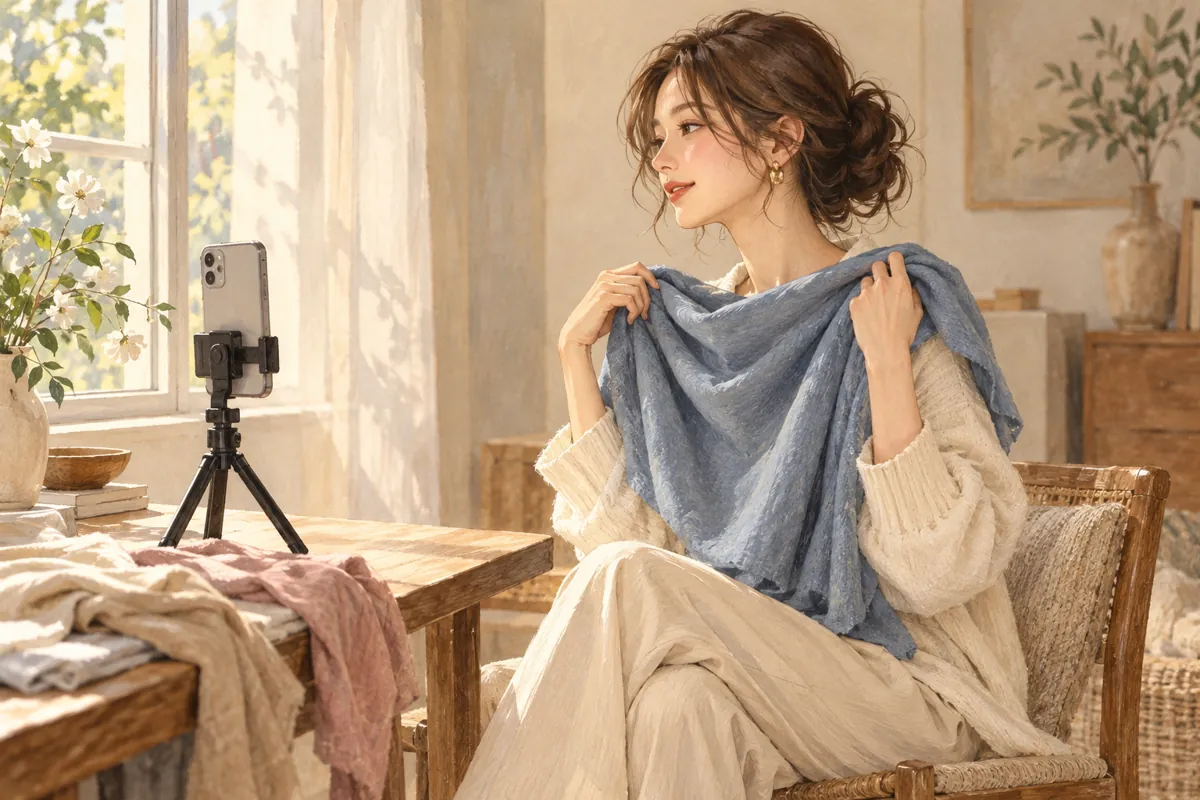
Keep your appearance consistent for the comparison and focus on real garments. If a previous cool palette felt unhelpful, identify the specific issue: too pale, too dark, too muted, or simply colors you dislike. “Cool” is not a complete description of a sweater.
Try these comparisons in two stages
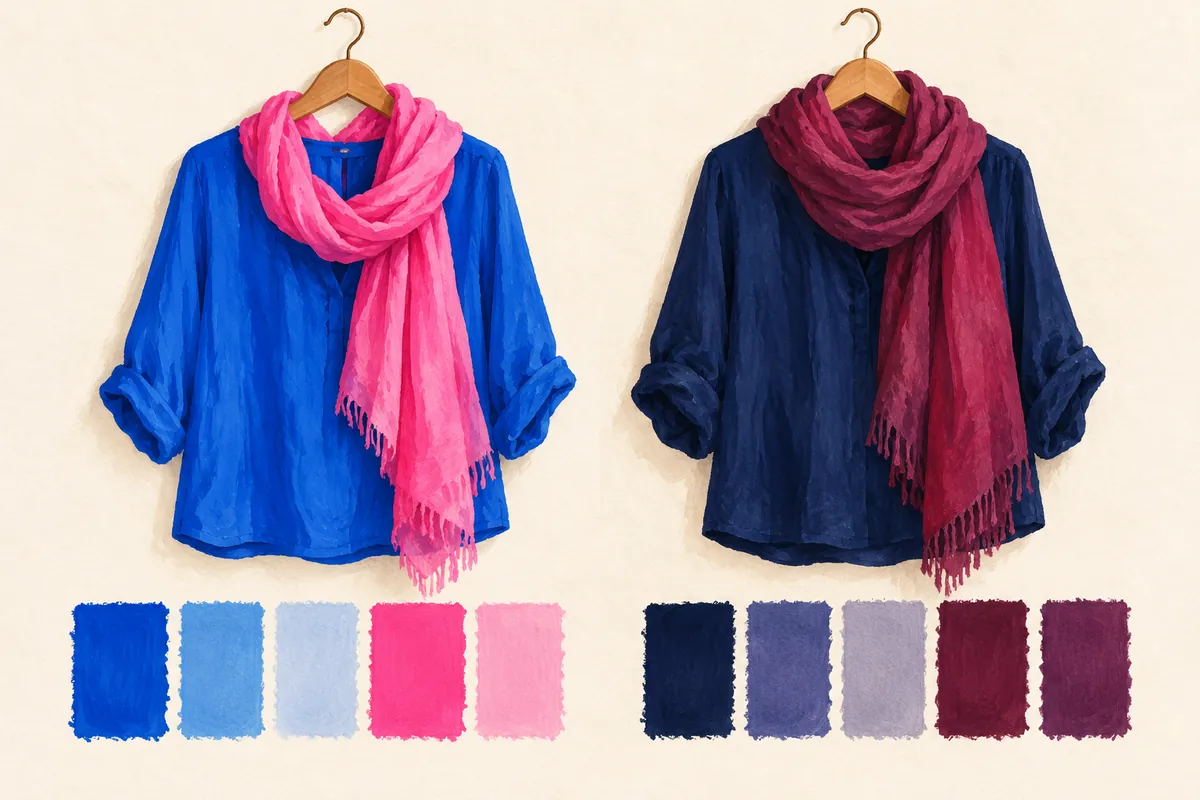
First compare color direction with plain fabrics near the face. Choose a clear cobalt and a deep navy, or a clear cool pink and a deep berry. Match the fabric finish and visible area as closely as you can. These pairings are our practical suggestions; they change more than one color dimension and are not a diagnostic test.
Then change the outfit arrangement while keeping one garment fixed. Wear the same navy top with a small vivid scarf, then with a darker scarf. Notice whether you prefer the clear accent, the deeper combination or a smaller amount of either.
| If you notice this | Try next |
|---|---|
| A bright top feels like too much | Use that color as a smaller accent before rejecting it. |
| An all-dark outfit feels heavy | Add a lighter or clearer element while keeping the dark base. |
| One photo looks much better | Check whether the light, exposure or pose changed too. |
| You like both directions | Keep both and choose by occasion. |
Keep a short comparison record
Use three columns: garments compared, setup, and what you would actually wear. For example: “Cobalt and navy knits; same window and jeans; cobalt for a simple outfit, navy with a bright scarf.” That note is more useful than “one is correct and the other is wrong.”
Repeat only the comparisons that affect a real purchase. If an unchanged wall shifts color between pictures, use the photo-lighting checklist before interpreting the result. Our depth and brightness guide explains the vocabulary in more detail.
Two outfit ideas to try from your wardrobe
For a clearer direction, try a cobalt top with charcoal trousers and a small cool-pink accessory. For a deeper direction, try a navy top with dark trousers and a berry scarf. Use comparable silhouettes so that fit does not decide the whole comparison.
You can also change the proportion: a vivid scarf with a dark coat creates a different effect from a vivid coat covering most of the outfit. Enjoying a small bright accent does not require you to enjoy a head-to-toe bright look.
Choose a useful palette before chasing a final label
If you consistently reach for clear accents, add those to your everyday combinations. If you prefer deeper outfits, build around the dark colors you already wear. If warmth is the unresolved issue, switch to the Deep Autumn versus Deep Winter comparison.
Use Stylist AI to explore a suggested seasonal palette and clothing combinations, then bring those ideas back to your wardrobe. The worthwhile outcome is a repeatable outfit you enjoy, even if the exact label remains open.
Common questions
Can dark brown eyes belong with a bright palette?
Dark eyes alone do not decide whether clear or deep clothing works better for your styling goals. Compare actual garments rather than assigning a season from one feature.
Does Deep Winter mean wearing only dark colors?
No. The framework includes lighter and brighter colors too. Compare the balance of an entire outfit, not only its darkest piece.
Sources & further reading
Sources checked October 28, 2026. Seasonal terms describe a styling framework. The comparisons and outfit examples are our editorial suggestions. Sources have not endorsed this article or our app.
Published by the developer of Stylist AI. Our editorial approach · Suggest a correction
← Back to the journal