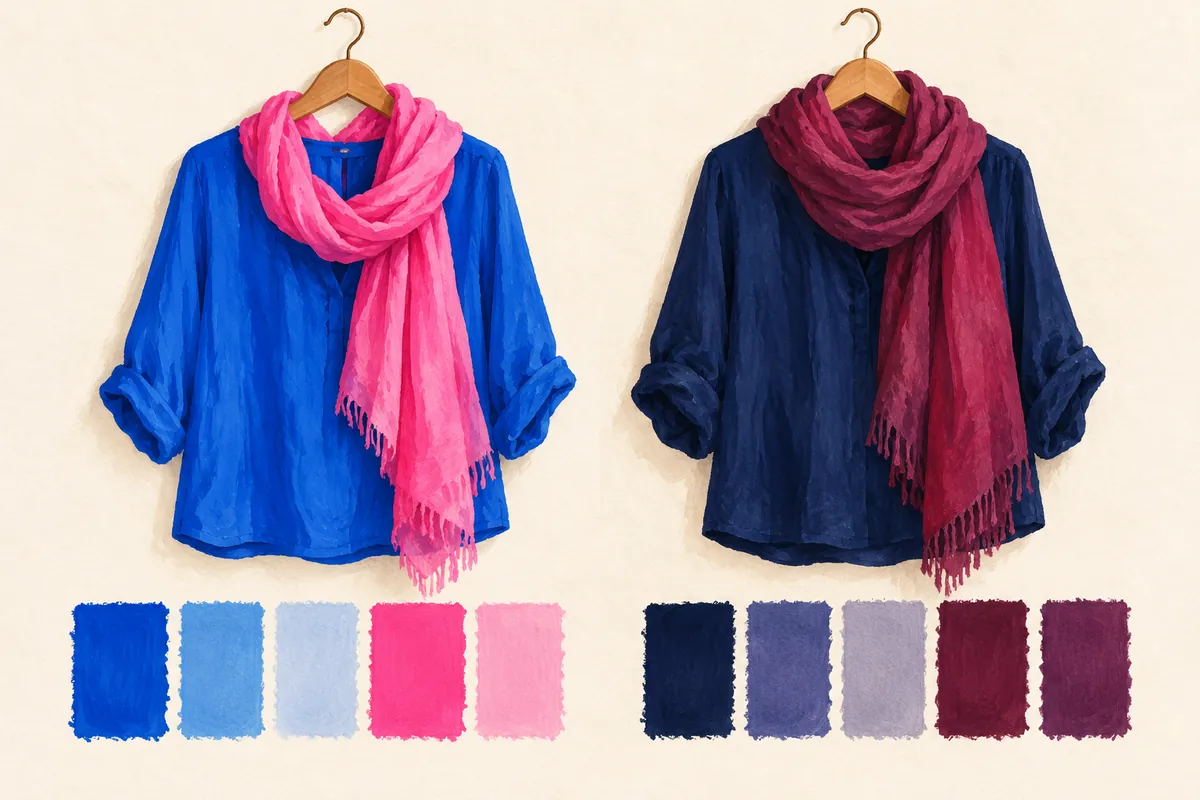
What actually separates these two palettes?
Deep and Dark are often used for the same seasonal category. The Concept Wardrobe describes Dark Autumn as depth-led with warmth, and Dark Winter as depth-led with coolness. That shared depth explains why the two wardrobes can feel close.
Use those names to organize a comparison, rather than treating them as a verdict about your face. This guide addresses warm versus cool within a deep palette. If your uncertainty is about clear color versus dark color, use our Bright Winter versus Deep Winter guide instead.
Keep favorite colors in a separate column
You might love chocolate, rust and olive because they fit your taste, your clothes or the mood you want. Keep that information: enjoying an outfit is a good reason to wear it. It simply answers a different question from whether you consistently prefer warmer or cooler fabrics beside your face.
Before trying anything on, make two short notes: “Colors I already love” and “What I want to compare.” For example: “I love brown coats; I want to compare a warm dark brown scarf with a cool charcoal scarf.” This gives a familiar favorite a fair comparison without requiring you to abandon it.
Build three small fabric comparisons
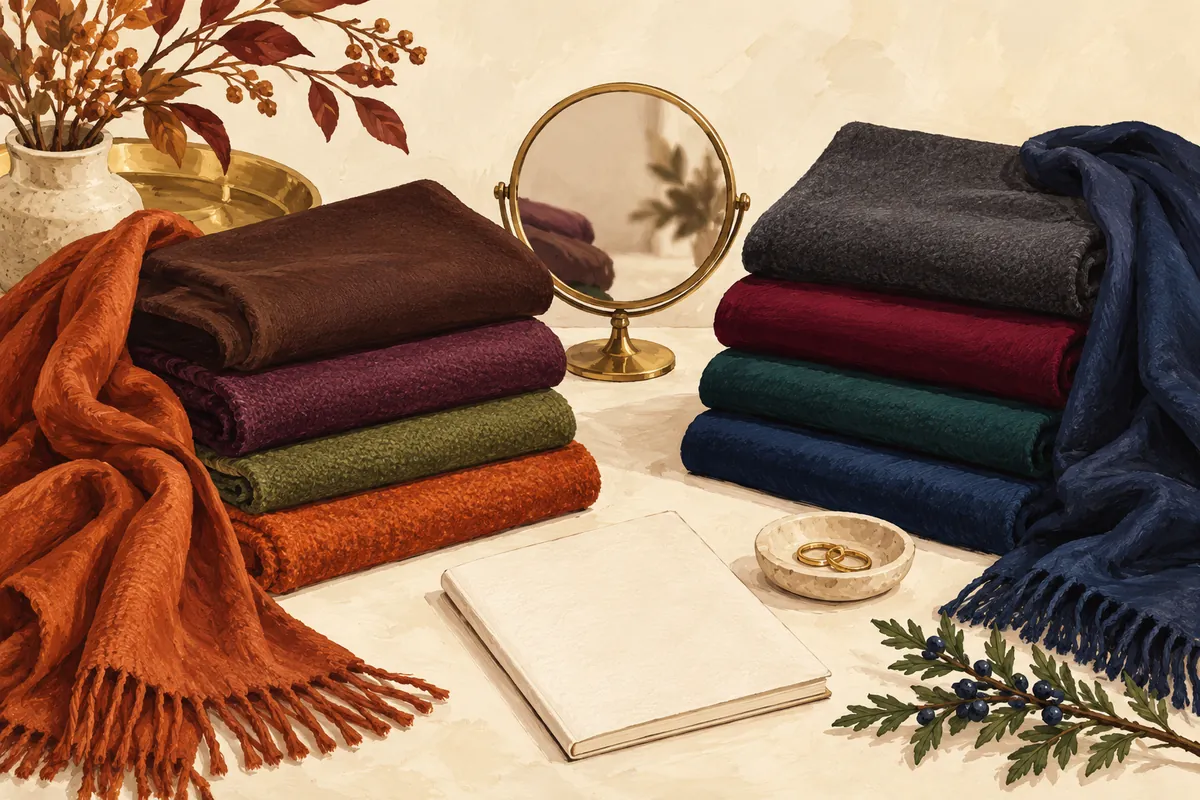
Gather plain garments or scarves of similar size and texture. These are suggested starting pairs, not a calibrated test:
| Warmer direction | Cooler direction | Keep similar |
|---|---|---|
| Rich dark brown | Deep charcoal | Overall darkness and fabric finish |
| Dark brick red | Deep berry red | Depth and amount of fabric |
| Deep olive | Deep blue-green | Depth and intensity |
A very pale beige against black changes too many things. If the only fabrics you own differ dramatically, write down the limitation or borrow a better pair. There is no need to buy a complete set of drapes.
Compare one pair, then reverse the order
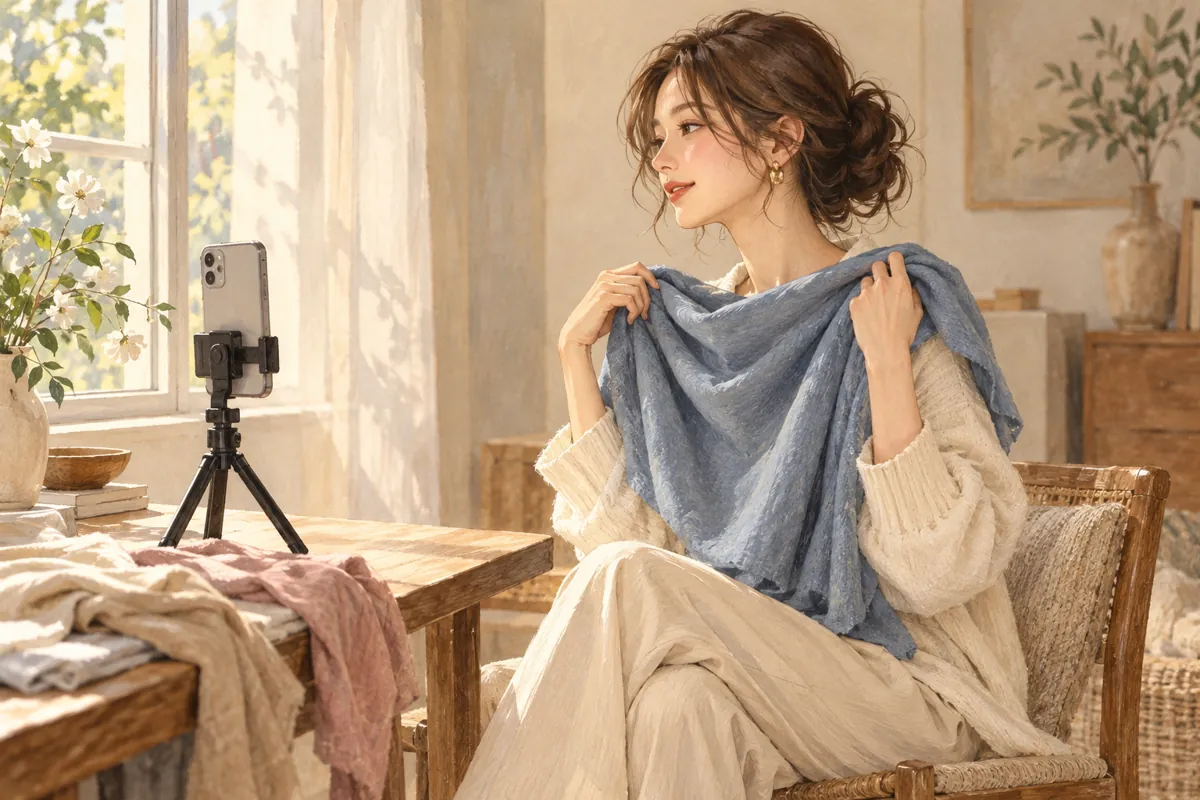
- Use steady, soft light and the same background. Keep makeup, hair and camera position consistent.
- Hold one fabric at the neckline, then the other. Keep the visible area similar.
- Describe the overall outfit effect in ordinary words: softer, stronger, quieter, more contrast, or simply preferred.
- Repeat in the opposite order. Check in the mirror as well as in photographs.
- Mark a pair as uncertain if the light changed or you prefer different options on different attempts.
Do not build a diagnosis around a shadow in one photograph. Our photo setup guide explains the camera checks. A repeated preference across several usable pairs is more helpful for shopping than a single dramatic comparison.
Turn the comparison into two wearable outfits
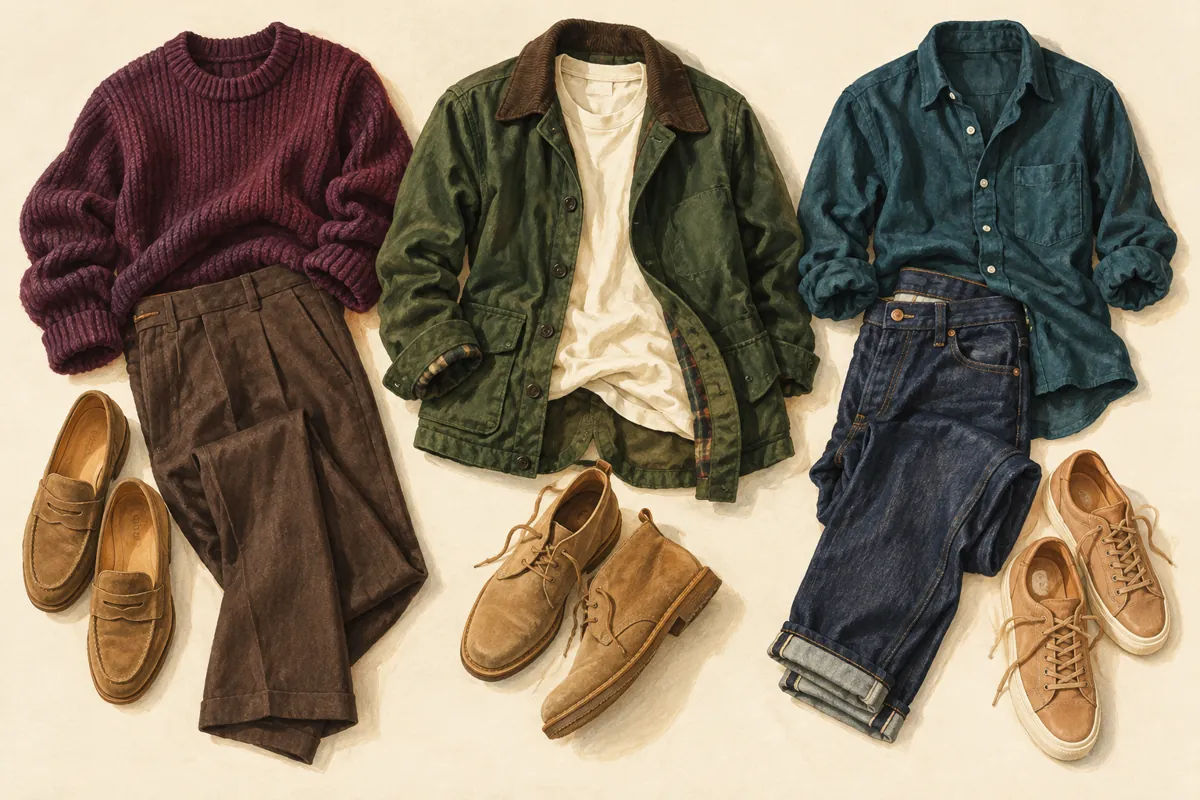
Try a dark brown knit with olive trousers and a warm red accent. Then try a charcoal knit with navy trousers and a cool berry accent. These are our outfit ideas, not mandatory uniforms for either season.
Keep the shapes and occasion comparable. A favorite tailored coat will often win against an awkwardly fitting top for reasons beyond color. If a warm scarf works best but you prefer cool trousers, you can combine them; garments farther from the face can play a different role in the outfit.
For more warm, deep combinations, see Deep Autumn outfit ideas. Keep the pieces you enjoy while you experiment.
What if the result stays mixed?
Save a small practical palette of the actual garments you reach for. You can build a useful wardrobe around dark brown, navy and berry without resolving every seasonal boundary. If you book an analysis, bring the specific pairs that confused you and ask the analyst to demonstrate the difference they are using.
For now, choose one outfit to repeat and one color to try next. That is a more useful result than replacing clothes to make a label feel consistent.
Common questions
Does loving brown mean I am a Deep Autumn?
No. It tells you that you enjoy brown. Compare similarly deep warm and cool garments before using that preference to choose a palette.
Can I wear colors from both Deep Autumn and Deep Winter?
Yes. Use the palettes as sources of outfit ideas and keep combinations you enjoy. You do not need an exclusive seasonal wardrobe.
Sources & further reading
Sources checked October 28, 2026. Seasonal terms describe a styling framework. The comparisons and outfit examples are our editorial suggestions. Sources have not endorsed this article or our app.
Published by the developer of Stylist AI. Our editorial approach · Suggest a correction
← Back to the journal